Content
Sept. 8
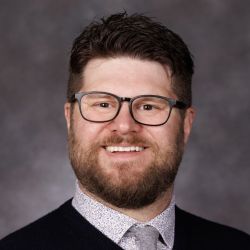
What Happens to Those Who Lived a “Good Life”?
The Invention of Afterlife and Its Alternatives in Ancient Judaism and Early Christianity
What happens when people who lived a good life die, especially if their deaths are seen as unjust or underserved? This question has animated and perplexed religious and philosophical thinkers for millennia.
This talk will explore the development of afterlife in Jewish religious thought and the legacy of this development within early Christianity.
Tom Fraatz, Lecturer in the Department of Classics and Religious Studies and Fellow in the Harris Center for Judaic Studies
Oct. 6

Lessons from the Fragile Balance of Human and Microbial Communities
This lecture will explore the parallels between the chaos of societal conflicts and microbial-scale conflicts which promote chronic inflammation and cancer.
Analogous to societal conflicts, dysbiosis of the microbiome can cause disruption of cellular communication, cellular homeostasis, and resistance to disease. Maintaining the “good life” in society does not mean a complete absence of conflict, but that we must manage challenges constructively, striving toward resolution, while emphasizing a vision of well-being that promotes balance within our bodies, our communities, and global society.
Peter Angeletti, Professor in the School of Biological Sciences and the Nebraska Center for Virology
Nov. 3
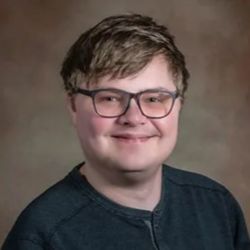
The Proactive and Value-Driven Decision(s) to Stay in Rural Nebraska
Drawing on the results of the Nebraska Roots Migration Survey, this talk will aim to dispel negative stereotypes associated with rural Nebraskans (e.g., they are ‘left behind’ or ‘stuck’) and the hollowing out of rural areas (i.e., ‘brain drain’) by showing staying as an active, intended, and deliberate choice made based on one’s cultural, familial, and moral values, as well as socio-economic opportunities.
Andrew Husa, Lecturer in the School of Global Integrative Studies
Jan. 26
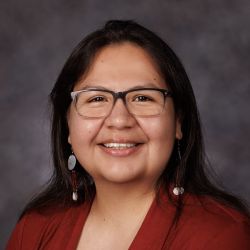
Woošgą pįį and Decolonial Thought
In Indigenous traditions our livelihoods as humans rely upon the livelihoods of the beings with whom we share this world. This lecture will discuss how these connections have been disrupted, resulting in social inequities and health impacts seen today.
The rise and support of decolonial projects aim to reinstate woošgą pįį, or "the good life," for all peoples. This talk will highlight local actions in Nebraska that work to (re)establish connections between peoples and place, striving for woošgą pįį.
Angel Hinzo, Assistant Professor in the Department of History
Feb. 23
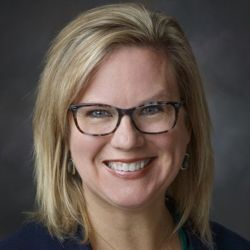
Building Connection and the Good Life Through Personal Storytelling
The good life is much more than the pursuit of happiness—it's instead the pursuit of and reflection on meaning. Personal storytelling is one method for making meaning, bridging divides, building connection, and coping with life’s difficulties.
This talk will focus on how the content, process, and application of personal storytelling affects and reflects the quality of our lives.
Jody Koenig Kellas, Willa Cather Professor in the Department of Communication Studies