Content
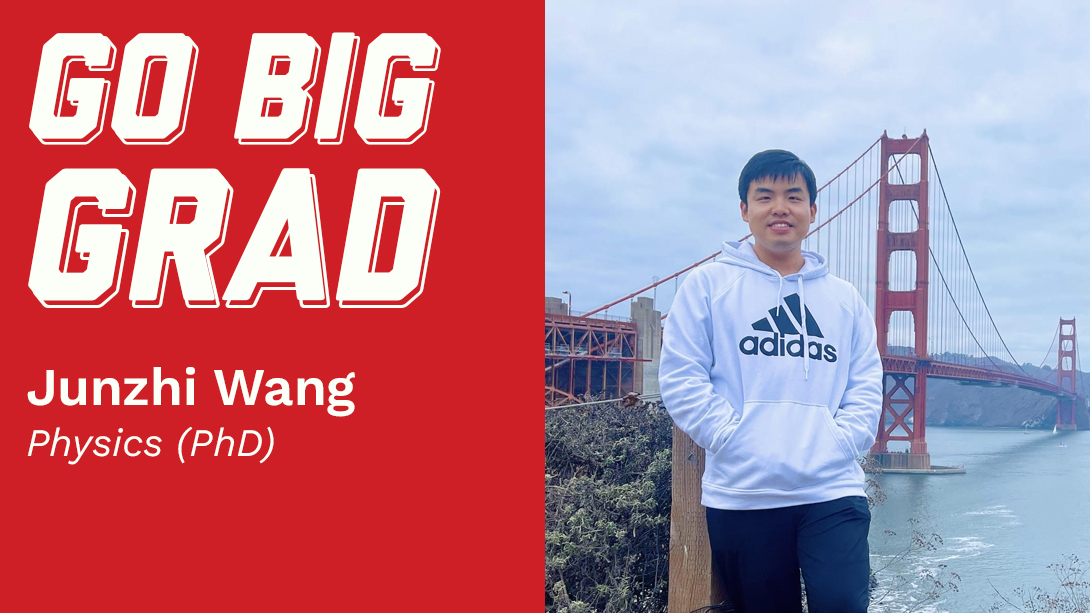
My best experience as a graduate student at Nebraska has been the strong work–life balance and the close, lasting friendships I’ve built with my friends, colleagues, and mentors. Everyone has been incredibly supportive—we understand each other’s challenges and always have one another’s backs. Lincoln itself is a small yet diverse and charming city, and I really appreciated how easy it was to step out of the lab, walk across the street, and immediately grab a quick bite or drink with friends. It made everyday life feel connected, balanced, and enjoyable.
Why this program?
My enthusiasm for experimental physics began with my undergraduate research in Atomic, Molecular, and Optical (AMO) physics. During the summer of my junior year, I had the opportunity to work on an experiment at Lawrence Berkeley National Laboratory using the Advanced Light Source. This experience solidified my interest in pursuing a scientific career in X-ray science and accelerator physics. When applying to graduate school, the UNL Physics Department stood out for its innovative research environment and breadth of opportunities—particularly in the rapidly developing areas of laser–plasma accelerators and high-intensity laser science, which deeply intrigued me.
Strongest mentors or role models
My research supervisor Prof. Matthias Fuchs, who is currently an adjunct professor at the Department of Physics and Astronomy, and my PhD committee chair Prof. Timothy Gay from the Department of Physics and Astronomy.
Research experience
Yes. I led the Department of Energy (DOE) LaserNetUS experiment K-125 at the Advanced Beam Laboratory at Colorado State University, where I developed and characterized a novel laser-driven ultrafast X-ray source. I continued this research by submitting a proposal to DOE LaserNetUS and was subsequently awarded a four-week beam time at the BELLA Center at Lawrence Berkeley National Laboratory. This was my first experience serving as a principal investigator, during which I also secured a $15,000 travel grant to support our research team and the transport of experimental equipment.
Since the summer of 2022, through the referral of my thesis advisor, Prof. Matthias Fuchs, I have been working with Prof. David Reis’s group at Stanford University as a visiting student, collaborating on the E-320 experiment. This experiment investigates strong-field quantum electrodynamics (QED) by colliding ultra-relativistic electron beams with ultrashort, ultra-intense laser pulses at the FACET-II accelerator facility at SLAC National Accelerator Laboratory. I subsequently relocated to the Bay Area to complete my PhD research at SLAC.
Plans after graduation
After graduation, I will join the FACET-II facility at SLAC National Accelerator Laboratory and Stanford University as a Research Associate, working with the same groups I am currently collaborating with as a visiting student. In this role, I will continue pursuing research in novel plasma-based accelerators and experimental strong-field quantum electrodynamics.