Content
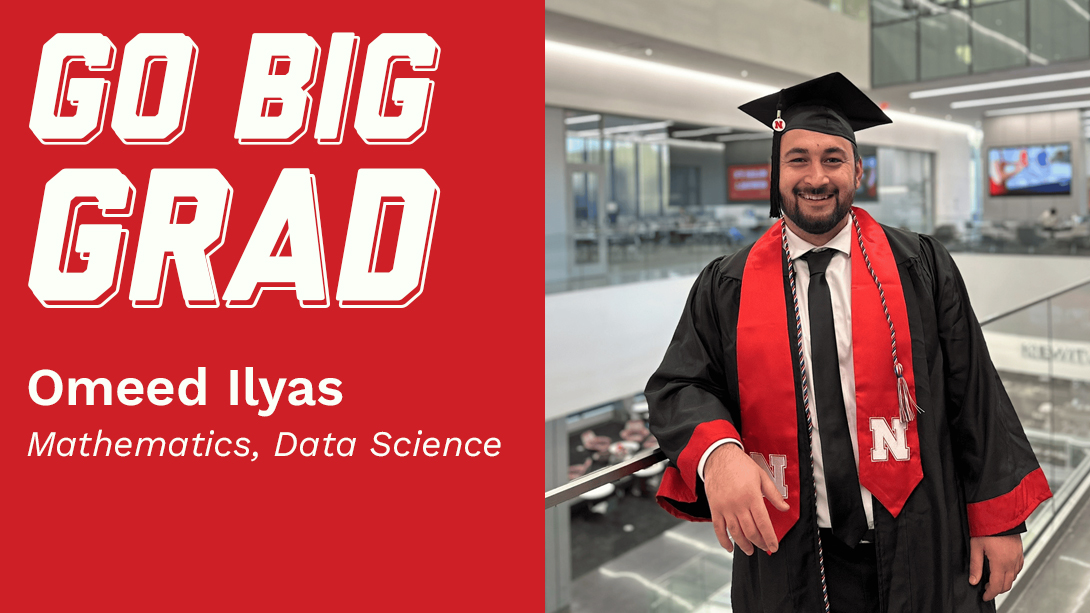
It wasn’t one specific moment that made me choose this path, it was more being around the right people and having the right experiences. Professors who pushed me and projects that combined math, coding, and data showed me that this mix really fits how I think and what I enjoy doing, and that’s what made me stick with it.
Why did you select these programs?
I chose my majors because I like understanding why things work, not just how to use them. I’ve always enjoyed problem-solving and thinking logically, which is what pulled me toward math, especially Discrete Math and Cryptography. I liked the challenge and the structure behind it. Data Science came in when I realized I wanted to actually apply that kind of thinking to real problems, using data to make decisions and find patterns instead of keeping everything theoretical.
My Computer Science minor came pretty naturally from that. I learned that knowing the math isn’t enough if you can’t build or implement anything. Once I started coding, I liked seeing ideas turn into something real, and learning how systems work made everything click together better.
Favorite course
My favorite course has been Data Structures and Algorithms. It was the class where everything I was learning finally came together. It wasn’t just about coding, it was about learning how to think efficiently and design solutions that actually scale.
I liked how the course forced me to slow down and think through problems before writing code. Choosing the right data structure, understanding time and space complexity, and seeing how small design choices affect performance really changed how I approach problems. It connected math, logic, and programming in a very practical way.
That class helped me feel more confident tackling unfamiliar problems, because instead of guessing, I now have a structured way to break things down and reason through solutions. It’s the class that probably influenced how I think the most.
Research or creative activity experience
Yes, mostly through course-based projects that were very research-focused.
In Math 435: Math in the City, I worked on a project analyzing whether Wisconsin was gerrymandered. That project involved working with real districting data, modeling voting outcomes, and using mathematical and computational tools to test fairness measures. It wasn’t a guided assignment, we had to decide what questions to ask, what metrics to use, and how to interpret the results, which felt very much like real research.
I also did multiple project-based courses in computer science. In CSCE 479 (Deep Learning), I worked on training and evaluating neural network models, experimenting with architectures, hyperparameters, and regularization techniques, and analyzing why certain models performed better than others. In CSCE 478 (Machine Learning), I worked on applied ML projects where we explored data preprocessing, feature selection, model comparison, and evaluation using real datasets.
Across these projects, the common theme was working with open-ended problems, there wasn’t a single correct answer, and a lot of the work involved experimentation, iteration, and explaining results clearly. That’s where I gained most of my research-style experience.
Internship or job
Yes, I interned at Sandhills Global as a DataOps and Data Science intern. My work focused on automating data workflows, maintaining pipelines, and supporting systems that teams relied on day to day.
My coursework connected directly to the role. My math background helped me approach problems logically and stay comfortable working through complex issues. Data Science helped me understand how to evaluate data and results instead of just trusting outputs. My Computer Science minor was especially useful for writing reliable code and understanding how systems behave in a production environment.
I worked with tools like Jenkins, Docker, and GitHub, with languages like groovy, Java, yaml and python and the combination of math, data, and computer science made it easier to adapt quickly and contribute effectively.
Involvement
Throughout my college career, I served in the Army Reserve, which was a major part of my involvement both on campus and in the community. Balancing military service with a full course load taught me strong time management, accountability, and discipline.
Plans after graduation
After graduation, I’ll be starting a full-time Data Science role at Sandhills Global. I’ll be continuing a lot of the work I did as an intern, but at a deeper level, building and improving data-driven systems and models. A big focus of my role will be using advanced AI and machine learning to support business intelligence, helping turn data into insights that actually inform decisions. I’m excited to keep growing technically while working on problems that have real impact at scale.